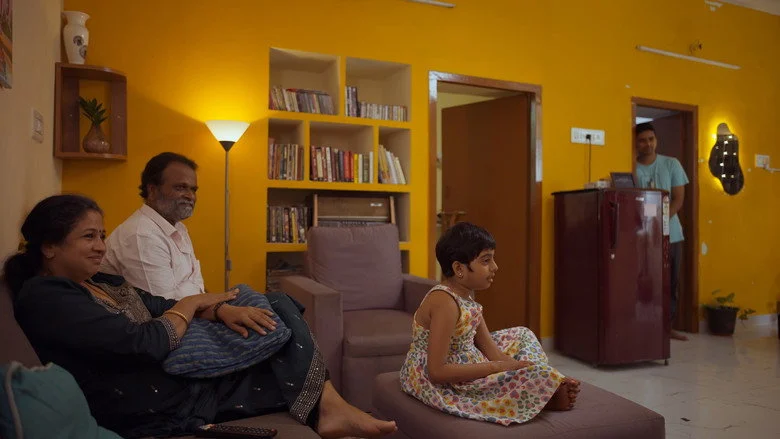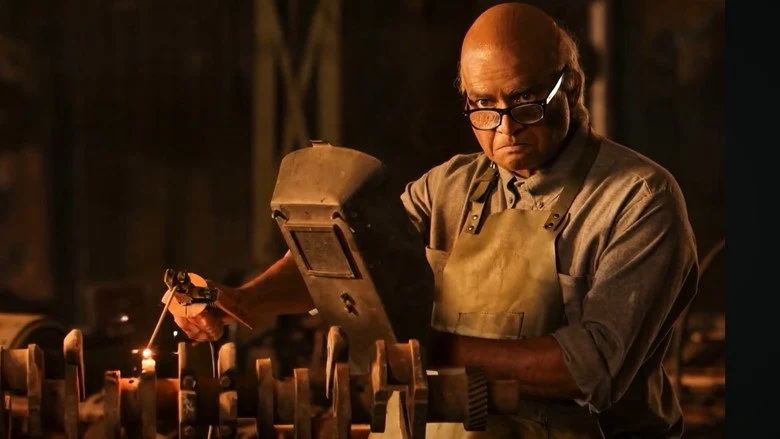
The motion poster doesn’t scream. It simmers. Sunny Deol stands against the embers of a burning subcontinent, and Shabana Azmi’s silhouette carries the weight of a nation splitting at its seams. This is Rajkumar Santoshi reaching back into history’s rawest nerve, and the opening-day figures suggest the gamble found an audience.
India Today reported a Rs 5.75 crore nett opening day, with worldwide gross touching Rs 8.34 crore, courtesy of early estimates from Sacnilk. For a period drama with an A certificate, that is not a rejection. It is a conversation starter.
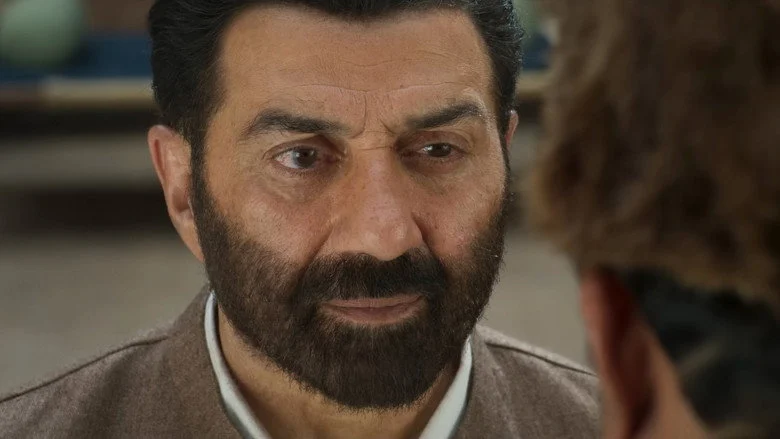
Sunny Deol Channels Restraint as Sikander Mirza
The man who broke box office records with his fists in Ghayal is asked to hold them here. Sikander Mirza is not the explosive Sunny Deol we’ve been conditioned to expect. He is a man trapped between family loyalty and the moral collapse of his world.
There is no verified scene-level breakdown available, but the promotional framing tells us everything. “In times of hatred and fear, he chose courage” is not a line for the casual action fan. It is a thesis statement. Deol’s casting signals an attempt to weaponise his star persona against the genre’s expectations, not within them. I suspect this is the most interesting he has been in a decade.
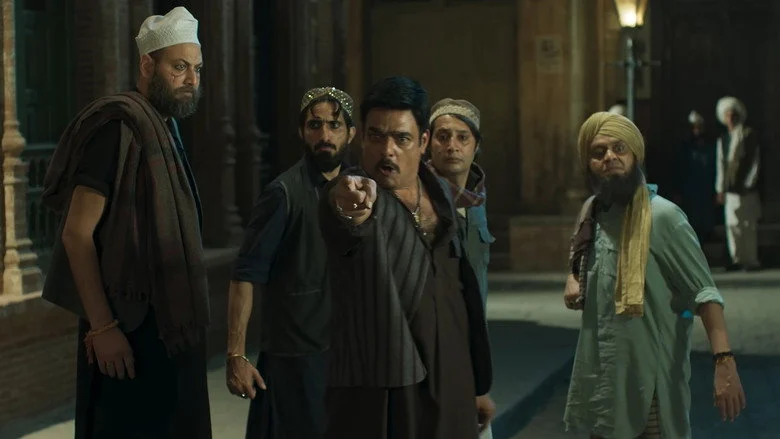
The Drama of Partition Demands More Than Good Intentions
The writing has ideas. That much is clear from the structural choices. Santoshi adapts a Partition-related play, and the central metaphor is described as powerful. The conversations carry weight, which is rare in mainstream Hindi cinema’s treatment of 1947. This is not a film that uses Partition as wallpaper.
But ideas need execution, and here the available material raises questions. The screenplay is described as a linear historical drama, but without verified post-release analysis, we cannot confirm whether the second half justifies the setup. A 2h 25m runtime for a period drama demands rigorous pacing, and the delay due to post-production work and reshoots suggests the edit was not easily found.
What the film does better than Santoshi’s earlier socially charged works is place the Partition setting at the very centre of the narrative. There is no contemporary framing device, no safe distance. The A certificate confirms the filmmaker is not softening the violence for family audiences. That is a choice. Whether it is a commercially wise one remains undetermined.
Preity Zinta’s Return and the Ensemble’s Weight
Preity Zinta returning to films is the casting coup here. Her presence as Hamida carries a nostalgia that complicates the period setting. She is not just playing a character; she is playing against a generation’s memory of her. The material does not offer verified acting-moment observations, but the decision to pair her with Deol after all these years signals a deliberate attempt at chemistry-based audience investment.
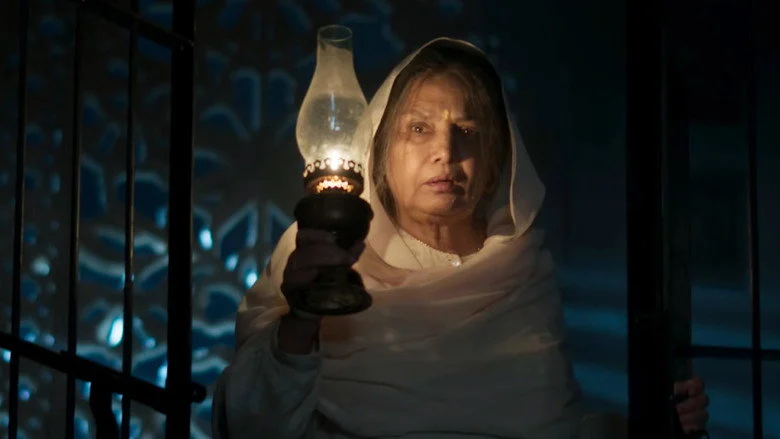
Shabana Azmi as Durgavati Devi is the film’s moral compass, or at least its most visible authority figure. Her casting alongside Deol in the teaser-linked material creates a generational tension within the frame. Karan Deol as Javed Mirza represents the family connection, though his role’s depth remains unclear. Ali Fazal as Habib Kazmi rounds out a cast that suggests Santoshi is working in ensemble mode, not star-vehicle mode. Abhimanyu Singh’s role is not clearly confirmed, which is itself a curiosity.
Mithun Chakraborty’s unspecified role adds another layer of intrigue. His presence in the principal cast without a confirmed character suggests either a cameo of significance or a subplot that the marketing is deliberately hiding.
The A Certificate and the Politics of Memory
An A certificate for a Partition drama is not a technicality. It is a statement. The subject matter places the film in a politically and socially sensitive historical context, and the certification ensures only adults engage with it. There is no verified controversy record, but the delay from earlier planned dates hints at a production that struggled to find its final form.
This is a film that knows exactly what it wants to say. The question is whether audiences want to hear it in a multiplex era dominated by spectacle. The opening day suggests a segment of viewers still crave historical reckoning on screen. For those who prefer lightweight commercial entertainment, this is an easy skip. For those who believe Hindi cinema should occasionally confront its own history, this is appointment viewing.
For more from this world of conflict and consequence, browse more Hindi Action reviews.
The Verdict on Batwara 1947
Go for the ambition. Stay for the cast. The film’s ideas are strong, its metaphor is powerful, and its conversations carry weight. The opening day of Rs 5.75 crore nett suggests a committed audience, but the final verdict remains undetermined until the full picture emerges. Watch it in theatres, where the period scale and Santoshi’s framing deserve the big screen.
Batwara 1947 is a serious attempt at historical drama that earns respect even where it may falter in execution, and I would give it a solid 3 out of 5 for its courage and craft. If this registers with you, Awarapan 2 review explores similar emotional territory through a different lens.
For those drawn to period conflict and moral complexity, Photographer verdict offers a complementary study in tension.