The opening frames of *Souls of the Wind* don’t announce drama; they observe weather. Peter Yung Wai-Chuen’s camera lingers on the natural world as if the characters are merely passing through it, a directorial choice that defines this 1982 Cantonese feature as a piece of cinematic poetry rather than conventional narrative.
Yung, working from a screenplay he co-wrote with Chui Hiu-sing, prioritizes atmosphere over incident. The film’s emotional temperature is consistently low, which will frustrate viewers expecting dramatic peaks, but it also signals a filmmaker in complete command of his tonal intentions.
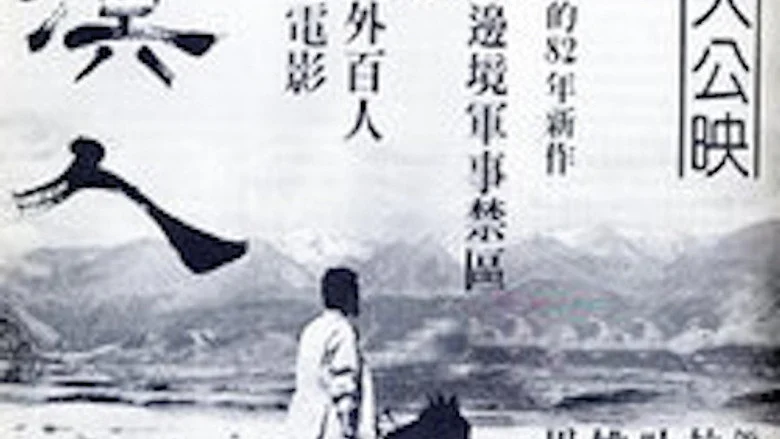
Si Wai Carries the Weight of a Film That Refuses to Explain Itself
Si Wai’s performance is the film’s quiet anchor, though the available material gives us little sense of the character’s arc. What we can infer is that Yung has cast performers who can hold stillness, actors willing to let the landscape do the talking.
Yiu Wai-Tiu and Yi-Shun round out the central trio, and their casting suggests a deliberate ensemble approach, no star turns, just bodies occupying space in Yung’s carefully composed frames. The performances are inseparable from the film’s meditative rhythm, which is either its greatest strength or its most alienating flaw.
Genre Execution: Drama as a Form of Patience
As a drama, *Souls of the Wind* operates on a wavelength that modern audiences rarely encounter. There are no melodramatic confrontations, no cathartic releases, just the slow accumulation of observational detail. Yung trusts that the audience will find meaning in the spaces between events.
This approach demands a specific kind of viewer. Those who submit to the film’s rhythm will find a contemplative experience that rewards attention to visual texture. Those who need narrative propulsion will likely check out early, and the film offers no concession to their impatience.
The craft here is unmistakably serious. Yung’s direction shows a filmmaker working within the Hong Kong New Wave’s more experimental edges, willing to sacrifice accessibility for a singular vision. Whether that vision fully lands is debatable, but its integrity is not.
Direction and Screenplay: A Study in What’s Left Unsaid
Yung’s primary strength is his refusal to over-explain. The screenplay, co-written with Chui Hiu-sing, trusts visual storytelling in ways that feel decades ahead of its time. Yet this same restraint becomes the film’s most significant flaw, character motivations remain so opaque that emotional investment becomes difficult.
The film’s pacing is unhurried to the point of testing patience, and there’s a thinness to the narrative spine that the atmospheric direction can’t fully mask. It’s a film that demands you meet it halfway, and not everyone will be willing to travel that distance.
Audience Reception: The Case of the Missing Conversation
Here’s where I’ll be honest: *Souls of the Wind* exists in a critical vacuum within the available record. No reviews, no ratings, no audience scores, just the bare metadata of a film that premiered in Hong Kong on December 23, 1982, produced by Associates (Asia) Film Company.
This silence is itself telling. The film has largely been forgotten by the mainstream conversation, which suggests it never found a substantial audience. But obscurity isn’t the same as failure, and for cinephiles who hunt for lost Hong Kong New Wave gems, this title carries the allure of discovery.
For those who treasure the more experimental corners of Hong Kong cinema from this era, there’s much to appreciate in Yung’s uncompromising vision. Browse more CN Drama reviews to see how this period shaped the region’s filmmaking identity.
The Verdict: For Scholars and Completionists Only
*Souls of the Wind* is not a film for casual viewers, nor is it an easy recommendation even for dedicated Hong Kong cinema buffs. It demands patience, rewards attention, and offers no hand-holding, a combination that will alienate as many as it captivates.
If you’re a student of the Hong Kong New Wave’s less commercial output, this is essential viewing. If you’re looking for an engaging drama, look elsewhere. The film’s historical value outweighs its entertainment quotient, and that’s a trade-off only certain viewers will accept.
This is a work that feels like a museum piece, significant, carefully preserved, but not necessarily alive. *Souls of the Wind* earns a 2.5/5 for its craft and ambition, though I suspect its true audience will always be smaller than its aspirations. Those drawn to Yung’s style might find similar resonance in Batwara 1947 verdict, which balances dramatic weight with a clearer emotional core. For another take on restrained storytelling, Equal review explores similar thematic territory with a more accessible approach.