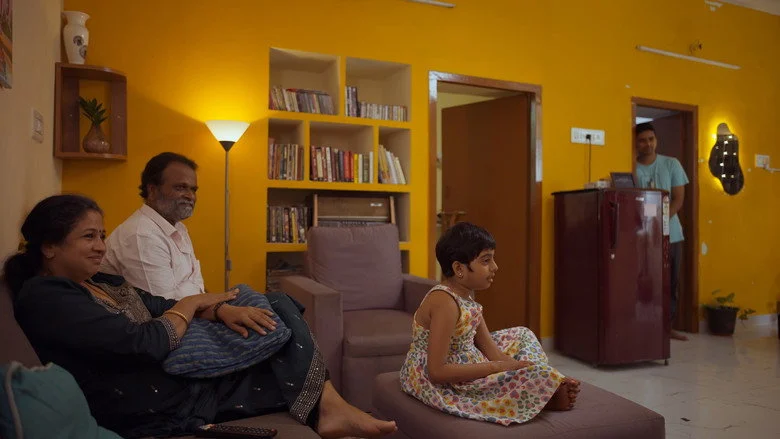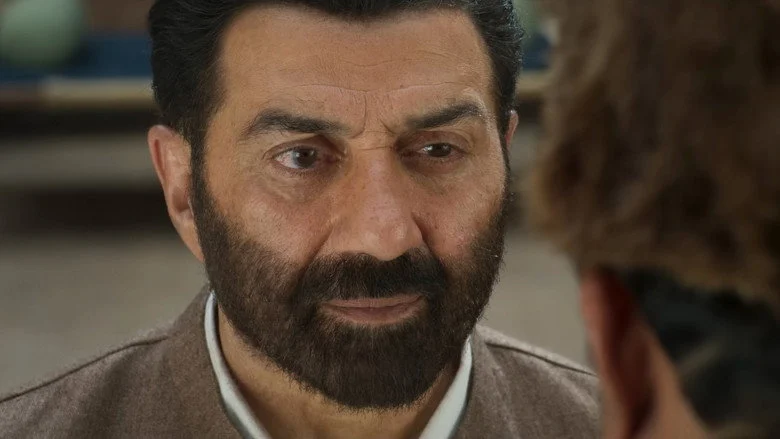
In the season’s most telling image, Chander and Sudha sit across a café table, their conversation carrying the weight of years not yet lived, their chemistry doing the work that the screenplay too often avoids. It is the kind of moment that makes you lean in, and then makes you wonder why the series takes eight episodes to arrive at what a tighter edit could have done in four.

Vikrant Massey’s Chander: A Performance of Quiet Accumulation
Massey anchors the series with the controlled, emotionally credible work we’ve come to expect from him. His scenes opposite Vedika Pinto are the strongest material in the season, and the early relationship-building moments between the two are where the show finds its pulse.
Yet there’s a nagging sense that Chander sits too comfortably within Massey’s established screen persona. He’s good here, genuinely good, but the performance never surprises, never pushes past the familiar registers that have defined his recent work.

Ruchir Arun’s Direction: Intimate Tone, Loose Grip on Pace
Arun maintains a restrained, intimate tone that suits the material, keeping performances at the center of the viewing experience. The warm visual palette and comfortable atmosphere give the series a consistent identity that’s easy to settle into.
But the direction fails to control pacing across all eight episodes, and the middle stretch drags noticeably. As one critic put it bluntly: “The pacing can be sluggish.”

The Genre Problem: Romance That Overstays Its Welcome
As a romantic drama, the series relies on chemistry and conversation rather than plot-driven turns. Emotional hesitation and missed timing serve as the dramatic engine, and the show balances tenderness with restraint instead of falling into melodrama. The lead conversations that build the Chander-Sudha bond are genuinely affecting, and the later confrontations that turn romance into a meditation on regret carry real weight.
But the execution falters at the structural level. “Why does it take eight stretched episodes to tell a tale that would have been better told in half the time?” one review asked, and the question lingers. The middle episodes shift from romance into long-term regret, but the shift feels padded rather than purposeful, with the emotional evolution spread too thin across too many scenes.
The closing stretch attempts to tie the timeline together but lands with a thud. The ending is widely described as abrupt and undercooked, and the present-day relationship between the leads remains underwritten, a significant flaw for a show whose central theme is the cost of timing and ambition on love.
The Supporting Ensemble: Stability Without Spotlight
Mahima Makwana brings quiet resilience to Preeti, acting as a stabilizing force in the relationship triangle. She doesn’t get the showy moments, but her presence gives the conflict a grounded counterweight.
Adil Hussain adds weight to the family and emotional texture, while Rajeev Siddhartha reinforces the social framework around the central story. Anubha Fatehpuria and Loveleen Mishra support the generational stakes with credible, understated work, and Sadiya Siddiqui strengthens the quieter dramatic scenes. The ensemble is uniformly solid, the problem is that they’re serving a story that doesn’t give them enough to do.
The Uncomfortable Question: Is Sudha Just a Trope?
The most pointed criticism comes from a review that warns the writers “come dangerously close to projecting Sudha as a Manic Pixie Dream Girl prototype.” It’s a fair charge, Pinto’s independent, assertive energy is the best thing about the season, but the writing doesn’t always know what to do with her beyond being the object of Chander’s longing.
The consensus range across HB Reviews, India Today, and News18 sits around 3.5 out of 5, and that feels about right. This is a show that understands its emotional core but struggles to justify its own length. The audience response mirrors the critics: strong chemistry and relatable handling of love-versus-ambition, undermined by slow pacing and an unsatisfying ending.
For viewers who prefer character-driven stories and slow-burn romance, there’s genuine warmth here worth exploring. For those who’ve seen this territory covered with more discipline elsewhere, the stretched structure will test patience. The best format is OTT, this is streaming comfort food, best consumed in patient sittings.
If you’re in the mood for more Hindi drama reviews, the platform has plenty to browse.
Musafir Cafe Season 1 earns a 3/5, a warm, well-acted romance that mistakes duration for depth, and would have been twice as good at half the length. For a more disciplined take on emotional restraint, check out Souls Wind review.
For another study in ambition versus connection, Equal verdict offers a sharper structural critique.