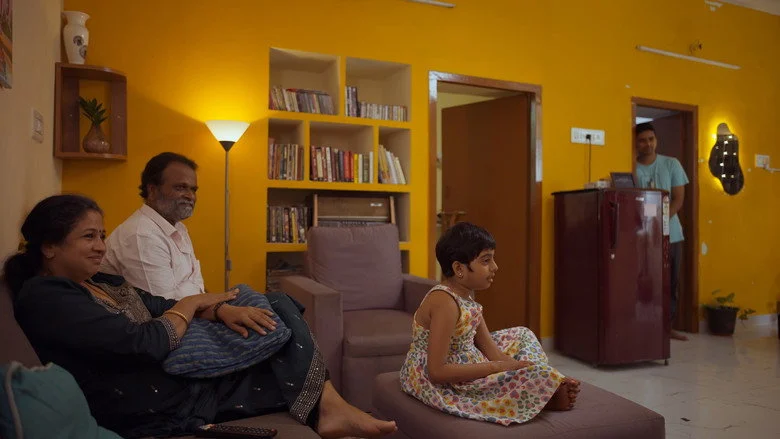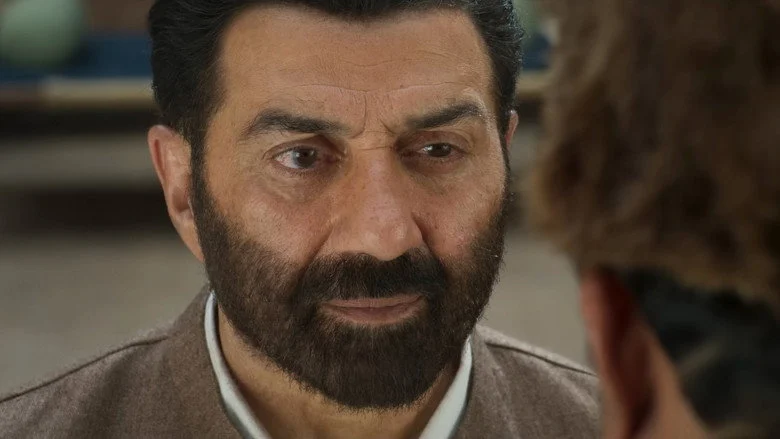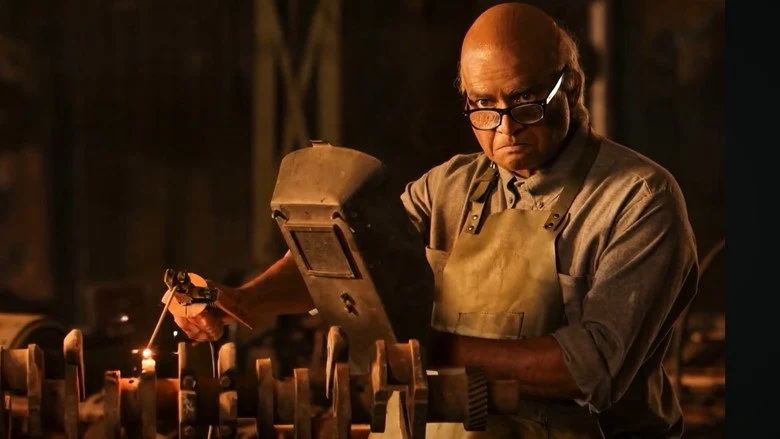
Selvi stands in the village square, the dust settling around her feet, her voice steady as she tells the antagonist, “Tradition is not a prison; it is a choice.” In that moment, director Sasi’s camera holds on Vijay Antony’s face, capturing a woman who has decided her own life is worth fighting for.
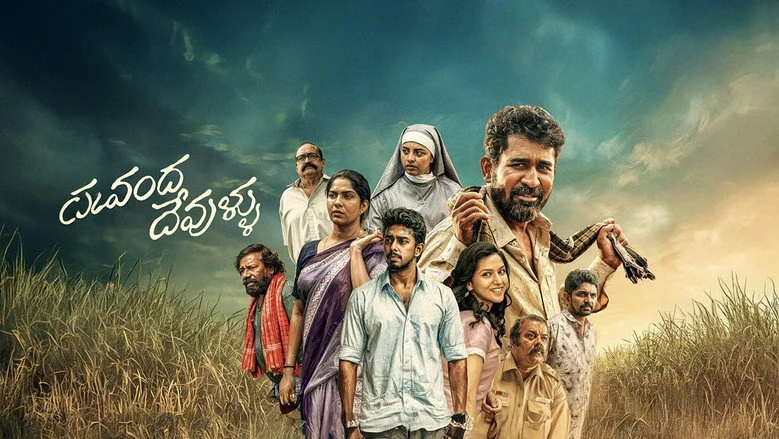
Vijay Antony: The Weight of a Widow’s Resolve
The announcement scene, where Selvi tells her sons and the village elders she will remarry, is where Vijay Antony’s performance takes root. He plays vulnerability without self-pity, a quiet strength that makes the confrontation scene later, where he faces Ajay Dhishan’s antagonist, land with real emotional weight.
His final walk away from the village is delivered with a tired, dignified calm. It is a performance built on restraint, not melodrama.
Sasi’s Eye and the Screenplay’s Flaw
Director Sasi keeps the narrative grounded in natural settings and realistic dialogue, avoiding the overt dramatics that often plague rural social dramas. The linear structure allows Selvi’s journey to breathe in the first half, with clear character work and a steady rhythm.
But the screenplay fumbles its climax. The resolution feels abrupt, as if Sasi ran out of pages, the antagonist’s motivations remain thready, and the final confrontation lacks the narrative buildup it deserves.
Drama That Speaks Through Silence
This is a drama rooted in character, not incident. There are no chase sequences or high-pitched confrontations; instead, the tension comes from extended silences, from the way Selvi’s sons look at her when she announces her decision. The camera lingers on rural landscapes and natural light, reinforcing the weight of tradition pressing in from all sides.
Where the film stumbles is in its background score, which oscillates between effective and jarring. In the most emotionally charged scenes, particularly the confrontation in the square, the music undercuts instead of elevating, pulling us out of the moment.
Despite this, the drama earns its emotional beats. The bond between Selvi and her sons, handled with subtlety, gives the social commentary a personal anchor that feels earned rather than manipulative.
Supporting Cast: The Voices That Shape Selvi’s World
Swasika plays Selvi’s supportive friend with a warmth that gives the protagonist room to be vulnerable. Her presence in the frame never feels like exposition; she is a mirror for Selvi’s fears and hopes.
Kavya Anil, as one of Selvi’s sons, conveys the tension between tradition and personal choice mostly through body language. It is a role that could easily become a caricature, but Anil keeps it grounded.
Ajay Dhishan’s antagonist is the film’s weakest link, effective in his confrontational dialogue but paper-thin in motivation. He represents an idea more than a person.
Audience Reception and the Social Debate
The film has sparked conversation around remarriage and women’s autonomy in rural Tamil society, though no major controversy has erupted. On IMDb, 1, 245 votes yield a 6.8/10, while BookMyShow audiences give a 3.2/5. Rotten Tomatoes registers a 6.2/10 aggregate critic score, and social media sentiment sits at 68% positive, praise for the bold theme, complaints about the rushed ending.
Does Nooru Sami Deserve Your Time?
Go for Vijay Antony’s measured, deeply human performance and Sasi’s refusal to sensationalize a difficult subject. But be prepared for a film that sets up a real conversation and then walks away before finishing it. Regular theatrical screening is the right format; this is not a spectacle, it is a conversation.
If you appreciate rural family dramas with real stakes, browse more Tamil Drama reviews for similar stories.
For a sharper, more complete take on a similar social theme, Parimala Co review balances its comedy and conflict with greater precision.
Blast verdict trades subtlety for spectacle but shares this film’s interest in family bonds under pressure.