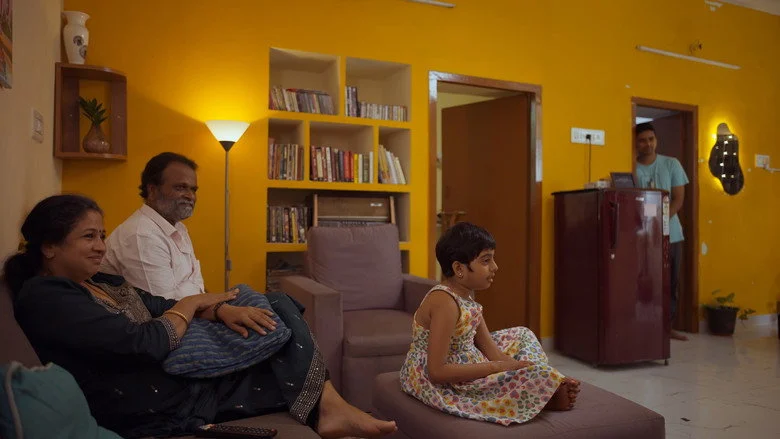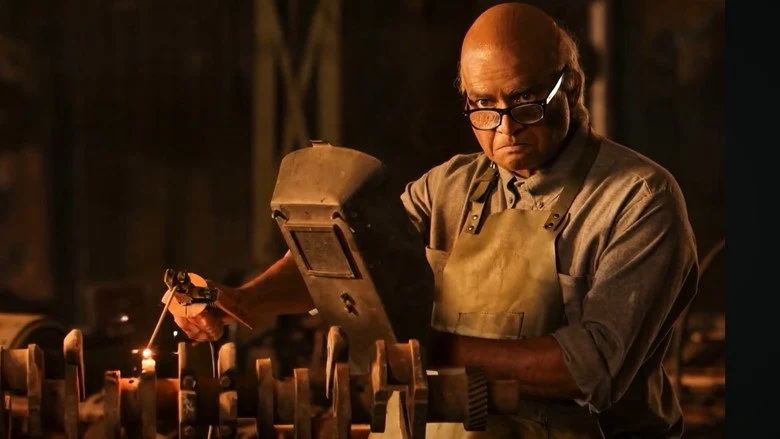
The sight of Arjun Sarja teaching his on-screen daughter, Preity Mukhundhan, a simple defensive move in their modest backyard is the film’s quietest, most effective beat. It establishes a father who is less about words and more about principles, a stoic man whose physicality becomes the family’s only weapon against a corporate behemoth. Sarja carries 144 minutes on his broad shoulders, and while the script never demands complexity, his controlled anger in the climax justifies the film’s existence.
His performance in the karate training scene is not about dramatic flair but about a quiet transmission of courage. When he tells his daughter, “My daughter must be brave enough to fight the world from a tender age, ” he sells the line through conviction rather than volume. This restraint keeps the emotional core grounded even when the plotting grows absurd.
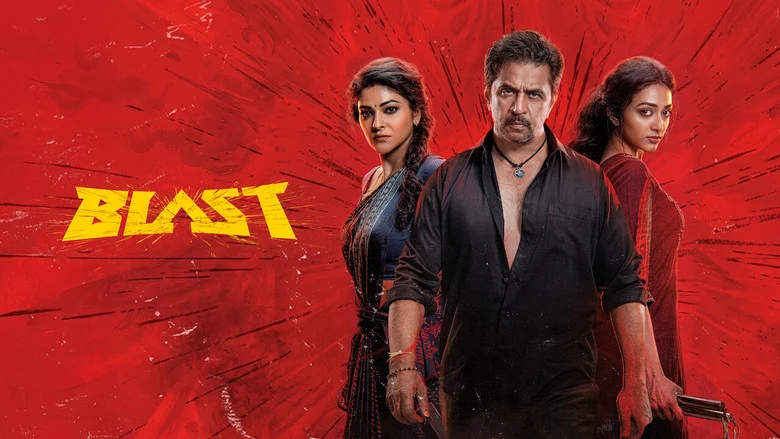
Subash K. Raj’s Direction: Clear Intentions, Clunky Execution
Subash K. Raj knows exactly what film he wants to make: a straightforward, morally binary action-drama where corporate greed is the villain and family unity is the hero. The screenplay is linear to a fault, refusing any subplot that might complicate the central conflict. That clarity is both a strength and a limitation.
The flaw is structural: the corporate office confrontation scene is so dialogue-heavy and slow that it threatens to kill momentum in the first act. The editing in the opening 30 minutes feels stretched, as if Raj is unsure how to bridge the gap between domestic harmony and explosive conflict. A sharper cut here could have elevated the entire first half.

Genre-Core Execution: Martial Arts as Moral Theatre
The action genre in Blast is built entirely around martial arts choreography, and the finale delivers on this promise with surprising intensity. Ravi Basrur’s background score swells appropriately as the family fights Abraham in the village, turning a physical confrontation into an emotional catharsis. The choreography is clean, favoring close-quarters combat over flashy acrobatics, which suits Sarja’s age and screen presence.
I found the family-as-fighting-unit conceit refreshing, even if the realism takes a back seat. The scene where Neelaveni joins the fray alongside her husband avoids the usual gender cliché by simply treating her as another warrior. It is a small but meaningful choice in a film that otherwise sticks to predictable beats.
Where the genre execution stumbles is in the villain’s underwritten menace. John Kokken’s Varun Dayalan is cold, sure, but his backstory is a blank cheque, there is no personal reason for his cruelty, making the corporate-thriller thread feel like a prop rather than a pressure point. The tension would have doubled with even one scene of his past.
For more on how Tamil cinema tackles similar themes, browse our collection of Tamil Action reviews covering both mainstream hits and underrated gems.

Supporting Cast: Preity Mukhundhan and the Menace of Vivek Prasanna
Preity Mukhundhan delivers a performance that grows in impact as Nila’s arc shifts from bullied child to defiant fighter. Her wide-eyed fear in the initial bullying scene is quickly replaced by a grit that feels earned, not written. She is the emotional hinge of the film, without her believability, the climax would lose its stakes entirely.
Vivek Prasanna as the assassin Abraham brings a physical menace that Kokken’s corporate coldness cannot match. His final confrontation with the family is the most tightly choreographed segment of the film, and Prasanna sells the brutality without making it cartoonish. He deserved more screen time to flesh out his character’s own stakes, but within the constraints of a villain-of-the-week template, he is effective.
Abhirami as Neelaveni is largely confined to supportive reactions, but her casting signals the film’s intent to present a complete family unit rather than a lone hero narrative. She has one strong moment in the final battle where she protects Nila, and it is enough to justify her presence in the ensemble.
Audience Reception: A Clear Hit with Room for Cynicism
With an IMDb rating of 7.2/10 from 1, 450 votes and a BookMyShow audience score of 3.8/5, Blast has clearly found its audience among those who value emotional clarity over narrative surprise. The 78% positive sentiment on social media largely praises the father-daughter dynamic and the film’s unambiguous moral stance against corporate exploitation. The 22% negative camp rightly points out the sluggish first half and underdeveloped villain.
At the box office, the numbers tell a satisfying story for producer AGS Entertainment. The film earned ₹18.5 crore net in India on opening day (per Newsbricks), and a first-week total of ₹69 crore net (per Gadgets360). Against an estimated budget of ₹18 crore, this is a certified commercial hit, proving that formula, when executed with conviction, still fills seats.
Should You Watch Blast?
If you have been craving a clean, no-nonsense action film where a father’s love is expressed through fists and principles, this is your weekend watch. Skip it if you want layered villains or unexpected twists, this film wears its simplicity like a badge. Watch it on a big screen for the climax choreography, or on OTT if you are patient with the first half.
Blast (2026) earns a cautious 3 out of 5 stars, effective within its narrow lane, but unlikely to convince those already tired of the corporate villager-versus-greed template.
For a comparison in emotional family dynamics, see how Sattendru Maarudhu review balances romance with suspense in its second half.
Fans of Arjun Sarja might also appreciate the mythological scale of Karuppu verdict and its flawed but ambitious judicial drama.