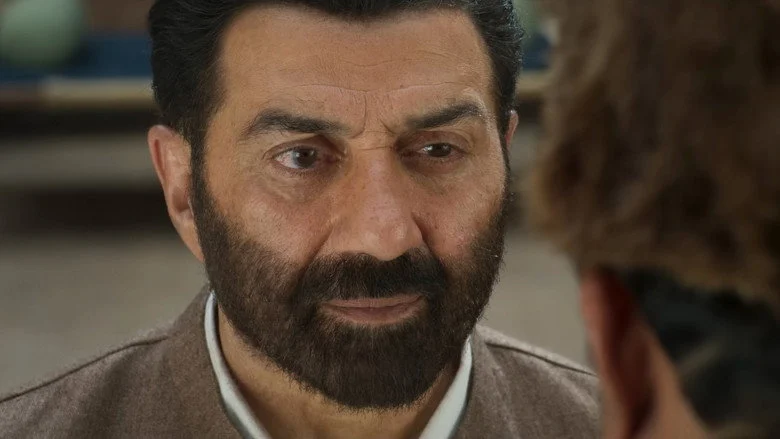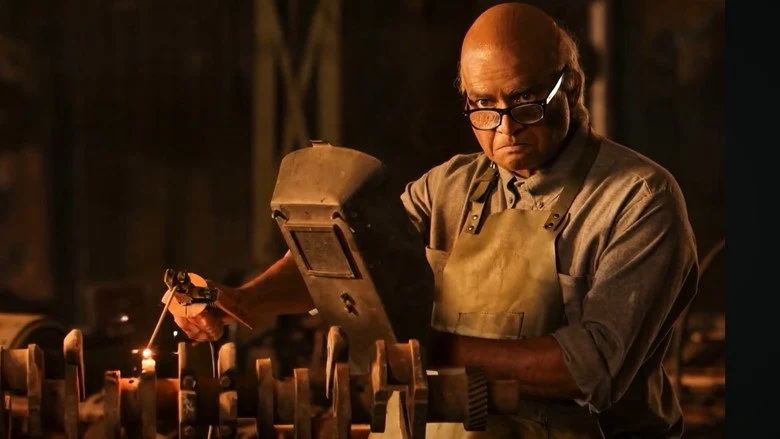
Jai enters a registrar’s office with Meenakshi Govindarajan, two strangers marrying on impulse, and the screen doesn’t let you breathe. The scene unfolds with the rushed urgency of a director terrified the audience might leave. Critics and audiences alike flagged this moment as unrealistic, and it is: the chemistry needed to sell this leap of faith is missing, replaced by convenient plotting.

Jai Delivers When the Stakes Sharpen
As the carefree orphan, Jai coasts through Act 1 on charm, but his real work begins in the second half. The discovery of the spy-cam blackmail racket is his strongest scene: eyes tightening, voice dropping to a whisper, the lightness of his character corroding into quiet fury.
His confrontation with corrupt politicians in the climax carries genuine weight, he finally becomes the anchor the film needed. For a performer often confined to lighter roles, this registers as a calculated risk that largely pays off.
Romantic-Thriller Fusion Hits an Uneven Rhythm
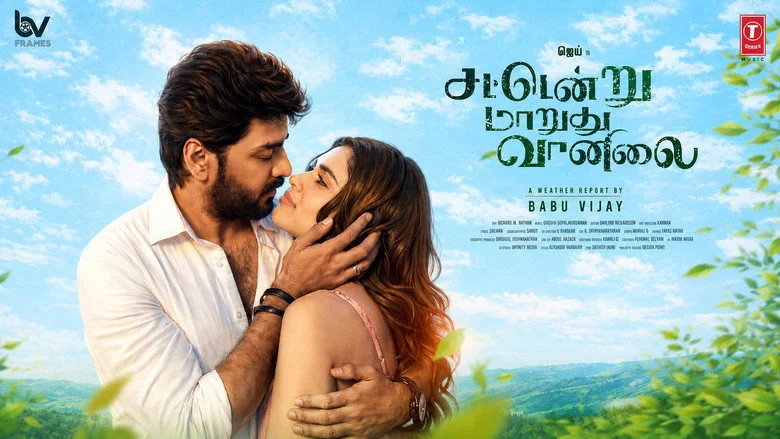
The romantic thriller genre demands equal investment in heartbeat and gunfire, and Babu Vijay’s film mostly delivers on the thriller side. The spy-cam racket revelation is the film’s single best crafted sequence: lighting goes cold, editing tightens, and the background score ratchets tension without cheap crescendos. It’s the moment the linear screenplay earns its genre tag.
But the romance half stumbles. The marriage scene lacks the emotional turning point that separates impulsive from inevitable. Critics noted plot holes in how the racket operates, and those gaps undermine the suspense when you stop to think. The secondary action sequences, however, land cleanly, especially the climactic fight, where Jai’s physicality suggests real stunt choreography rather than cut-heavy coverage.
Where the film succeeds is in its tonal risk: marrying a carefree first half to a paranoid second act. That structural gamble doesn’t fully cohere, but the ambition is visible in every frame of the racket discovery.
Yogi Babu and Vijay: Two Sides of the Same Script
Yogi Babu appears in the confrontation scene with his characteristic deadpan timing, but the role is underwritten, he exists to nod and react. His casting signals a need for comic relief in a film that doesn’t structurally require it, which suggests a script that hedged its bets.
Vijay, playing the antagonist, has a physically effective presence but zero character depth. The script never explains his motives beyond being a jealous rival. What we get is a villain who looks dangerous and fights well, but feels like a placeholder for a more complex threat.
Meenakshi Govindarajan holds her own opposite Jai, especially in the impulsive marriage scene where she must sell conviction without backstory. Her limited screen time in the second half is the film’s most telling structural weakness.
Audience Reception: A Second-Half Redemption
While critical ratings remain undisclosed, audience response consistently praises the same sequence: the spy-cam discovery. The financial struggles and corrupt politicians create a grounded threat that compensates for the rushed opening.
I suspect viewers forgiving the first half are doing so because the second half earns its emotional thesis, “Love can endure even in the face of the darkest threats”, through action rather than dialogue. The inconsistent pacing, especially in the middle stretch where the couple moves from place to place without narrative propulsion, remains the single biggest obstacle to wider approval.
There is no controversy here, no political angle. The film’s risk is purely creative, and that makes its flaws easier to forgive.
For a broader look at how other Tamil filmmakers tackle similar tonal swings, browse more Tamil Thriller reviews.
Skip the first thirty minutes. Enter at the spy-cam revelation and stay for the climax, the action choreography in the confrontation with corrupt politicians is worth the price of a regular theatrical ticket. Watch it in a good screen with solid sound; the background score does real work.
Sattendru Maarudhu Vaanilai is a risky, imperfect film that earns a 2.5/5, not because it fails, but because it knows exactly how close it came to greatness.
For a sharper exploration of flawed protagonists in high-stakes scenarios, check out the Karuppu review.
Kara verdict anchors its tension even more meticulously in a single performance.