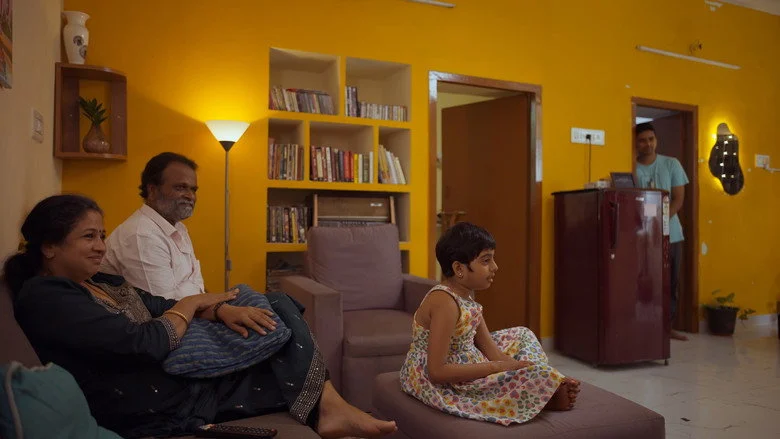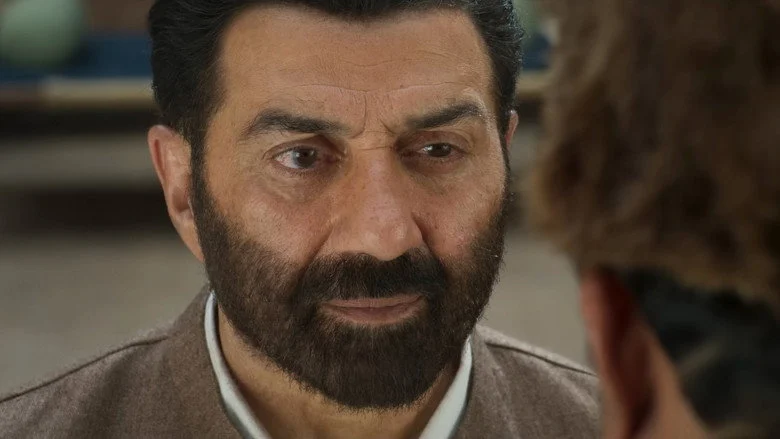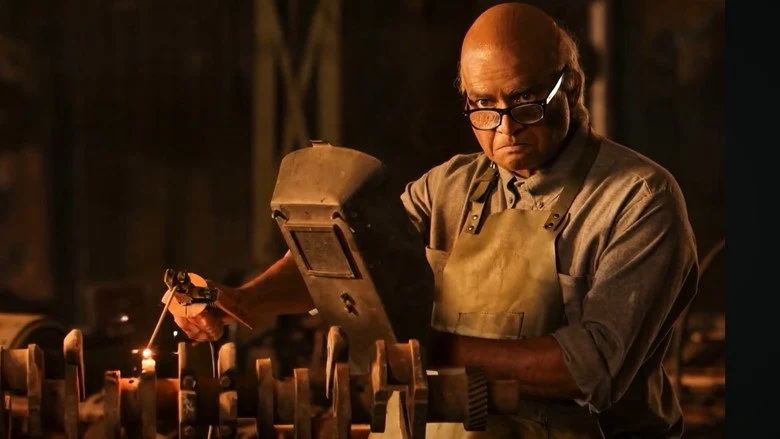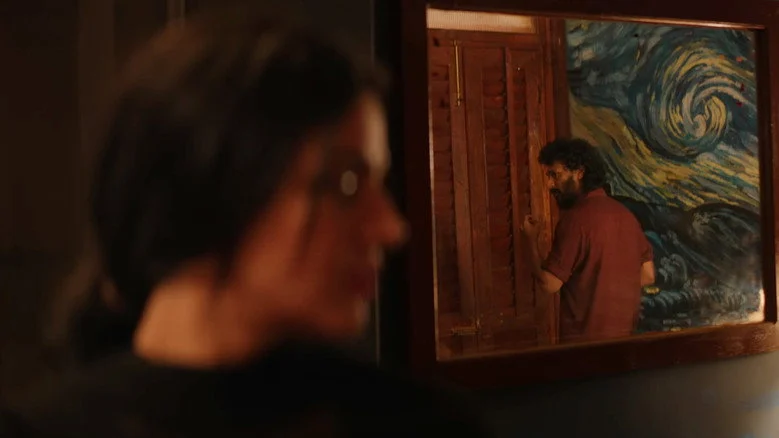
The discovery of a dead body in a loud, cramped Chennai household serves as the opening of Pandiraj’s *Parimala & Co*, and in that single unbroken frame, we see everything the film wants to be: morbid, funny, and claustrophobically human. The initial 30 minutes turn the family’s domestic chaos into a sight gag that slowly curdles into dread, making it clear we are watching a black comedy that is also a serious thriller.
Jayaram Plays Exhaustion Without a Single False Note
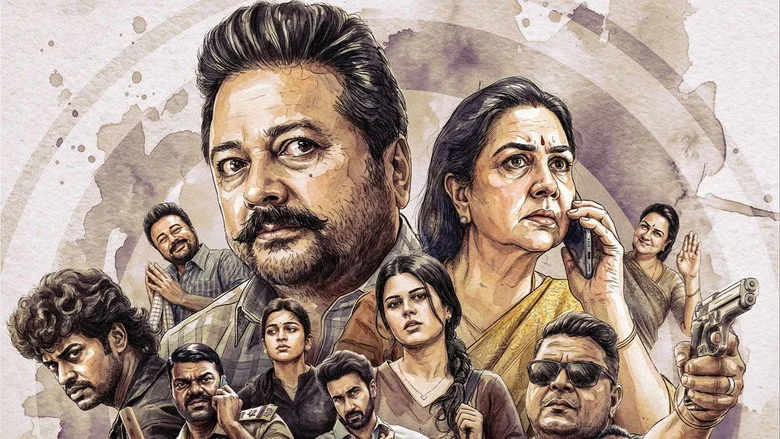
Jayaram, as the beleaguered patriarch, carries the film’s emotional weight on his slumped shoulders. The character’s stress during the confrontation with Inspector Emperumaan is played as a slow-burn exhaustion rather than hysterics, a choice that pays off.
You can see the calculation in his eyes as he balances protecting his family with not looking guilty. He also manages the comedic beats without undercutting the thriller tension, which is a trickier balance than it looks.
Mysskin and the Art of Playing the Suspect
Mysskin does not so much enter the film as seep into it. His role as the suspected antagonist makes every early scene feel loaded with potential menace, and the final revelation scene is his finest work here, he delivers the twist with a stillness that makes the surrounding chaos feel louder.
The casting choice is smart: Mysskin’s public persona as a director known for intense, philosophical violence lets Pandiraj play with audience expectations without telegraphing the truth.
Pandiraj’s Screenplay: Genre-Blending That Works, Until It Sags
The director of *Pasanga* and *Kedi Billa Killadi Ranga* knows how to intercut black humor with genuine thriller setpieces. The discovery of the murder victim is staged with perverse comic timing, characters bumping into each other, arguing about irrelevant domestic matters just before the body is found, and it lands beautifully. The confrontation scene where the family tries to “behave inconspicuously” while the police circle them is the film’s best stretch: tight, uncomfortable, and very funny in a dark way.
But the middle section runs out of new ideas for its central tension. Secrets are teased and then re-explained, and the suspense relies on repeating the same beats, a character gets nervous, another hides something, a third panics, for nearly 45 minutes without escalation. The runtime of 210 minutes is the film’s single most destructive creative choice.
I found myself checking the clock around the halfway point, which is the last thing a thriller should make you do. A tighter 140-minute version of this story would have been genuinely excellent; the current cut feels like a great film fighting its way out of an overstuffed script.
Urvashi and the Supporting Cast: The Film’s Second Engine
Urvashi brings emotional gravity to the family’s crisis moments without turning saccharine. Her silent reaction shots during the climax, as the family confronts the truth, carry more weight than any dialogue could. She grounds the film’s more theatrical performances.
Yogi Babu is given the thankless task of providing pure comic relief, and while his timing is impeccable, the script sometimes cuts away from the thriller tension for his scenes in a way that deflates the scene-level tension. Santosh Sobhan and Sanjana Krishnamoorthy are solid in limited roles, though the script does not develop them beyond function, you never quite feel you know who they are outside the crisis.
Ananthika Sanilkumar and Sandy exist mostly as plot devices, which feels like a missed opportunity given this cast’s ability. The film’s reputation for “complex family dynamics” would have benefited from giving these two a scene that grounded their individual fears.
Browse more Tamil Comedy reviews for similar genre-blending experiments.
Why the Runtime Hurts the Genre Execution
The black comedy elements work best when they are deployed as punctuation, not as extended scenes. The moments of dark humor, particularly the family’s desperate attempts to act normal while hiding evidence, land because they are precise and brief.
But the thriller structure requires sustained tension, and Pandiraj’s script keeps reaching for the same note: the family is scared, the police are suspicious, someone might talk. The pacing in the second half becomes repetitive.
The cinematography’s choice of dark, moody lighting and tight close-ups during interrogations is effective in isolation, but when those same shots are repeated without narrative progression, they begin to feel like filler rather than atmosphere.
The audience split on *Parimala & Co* is revealing: those who love it praise the acting and the mystery’s clear conclusion, while those who dislike it almost universally cite the long runtime. If you can sit through the sagging middle, the final revelation scene and the resolution of the family’s relationships are satisfying.
If you can spare three and a half hours at home, or have the bladder of a marathon runner, *Parimala & Co* is worth the patience for Jayaram’s performance and Pandiraj’s best confrontation sequences. Watch it on OTT, where you can pause the repetitive middle without guilt. This is a 3.5-star family thriller that loses half a star to its own editing room door.
Blast review similarly uses family pressure as a dramatic engine, though with more comic restraint than Pandiraj’s sprawling film.
Sattendru Maarudhu verdict earns its second half by trusting its characters more than this one trusts its runtime.