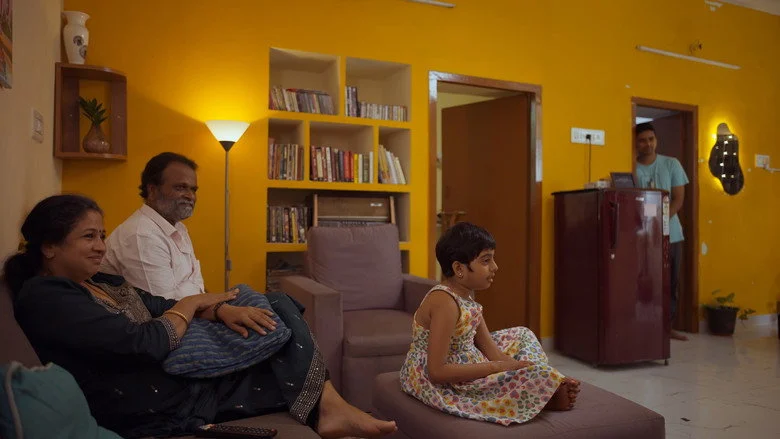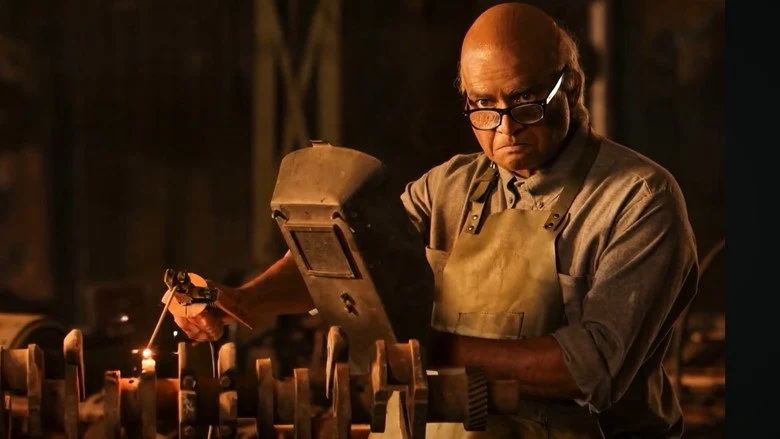
The first scene of any value in Sathyavan Savithiri arrives when Savithiri (Keerthy Suresh), a young lawyer, learns that the case she is fighting involves her husband. The camera stays on her face as the personal and professional collide, setting up a conflict that never needs a single action beat to feel heavy.
You get the sense immediately that director Praveen S. Vijaay is betting everything on how well this argument-driven premise holds. That is a high-risk choice for a Tamil legal drama.

Keerthy Suresh holds the centre with a performance of controlled strain
Keerthy Suresh carries the film’s emotional and procedural weight. Her Savithiri is energetic in the courtroom, but the performance lands harder in the quieter beats, when she registers the weight of a case that implicates someone she loves.
She does not overstate the distress. The role asks for a lawyer’s composure and a wife’s vulnerability, and Suresh manages both without letting one diminish the other. The scene where she prepares for the courtroom confrontation with her mentor is where her control shows most.
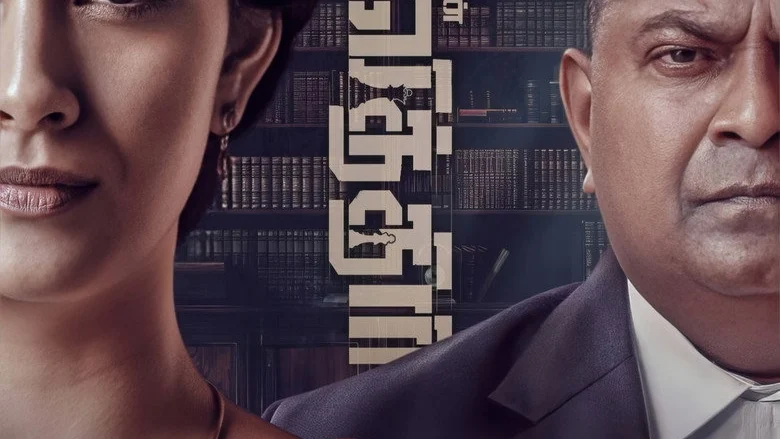
Mysskin turns the antagonist role into a study in moral rigidity
Mysskin, playing the senior advocate and opposing counsel, is the film’s most interesting character. His mentor figure is not written as a villain in the traditional sense, he is morally compromised and legally rigid, which creates a far more interesting opposition than simple good-versus-evil.
In their courtroom face-off, Mysskin never raises his voice; his threat is procedural. That choice makes the ethical stakes feel real. The film is smart enough to let him argue his side without making him cartoonish.
Shilpa Manjunath and Bala Saravanan appear in supporting roles that lack strong scene detail in the available material, but their casting signals the film’s intent to build a credible legal world around its leads rather than a star-driven vanity project.

Direction and screenplay: one smart structural call, one clear limitation
Praveen S. Vijaay makes one excellent structural choice: he keeps the legal argument front and centre, never fleeing into subplots that dilute the core conflict. The mentor-versus-student setup is the film’s engine, and the director trusts it.
But the screenplay feels lean to a fault. Without verified scene detail for the second half or climax, the available synopsis suggests a linear structure that may lack surprise. I wonder if a film this reliant on direct confrontation can sustain its tension across a full runtime.
If you enjoy films where dialogue and legal procedure drive the drama rather than spectacle, browse more Tamil Drama reviews for comparable structural choices.
The courtroom craft is patient but risks monotony
The film’s genre-core execution stays faithful to the legal-drama playbook. The central device is the courtroom face-off, and Vijaay stages it without flashy camera movement or background-score manipulation. The argument sequence where Savithiri pushes against her mentor’s legal strategy is the film’s most confidently directed scene, two actors, a bench, and a moral question.
That restraint is admirable, but it also exposes a limitation: without a stronger visual language or editing rhythm, the middle portions may blur into a single long debate. The absence of action-heavy plotting means every line of dialogue carries the burden of engagement.
The third-act resolution is not fully detailed in available sources, which raises concerns about whether the film finds a satisfying emotional finish or simply ends when the argument stops.
Audience reception and box office data remain under wraps
No verified critic ratings, IMDb scores, or trade figures are available in the provided material. That absence is itself a statement, unless the film generates strong word-of-mouth post-release, its modest profile may struggle to find audience attention in a competitive Tamil release calendar.
The film’s best hope for longevity is the female-led premise and the Mysskin-Keerthy Suresh dynamic, which trade analysts would likely note as its strongest commercial anchor if box office data emerges later.
Closing recommendation
If you value courtroom dramas where performance and argument replace set-pieces, Sathyavan Savithiri is a watch worth planning for. Do not expect adrenaline, expect two skilled actors arguing about ethics across a wooden desk. See it in a regular theatre, where the lack of visual spectacle will not distract from the dialogue.
Sathyavan Savithiri earns a cautious 3 out of 5 for its craft conviction, but the missing climax detail keeps it from a stronger recommendation.
For a sharper political thriller that leans on procedural logic rather than emotional weight, read the Jana Nayagan review review to compare how similar structural risks play out across genres.
If you prefer comedy that builds momentum through character banter rather than dialogue density, the Con City verdict review offers a lighter counterpoint.