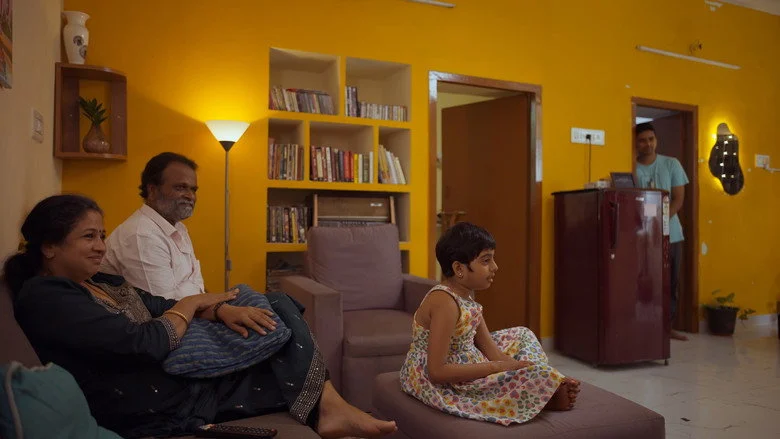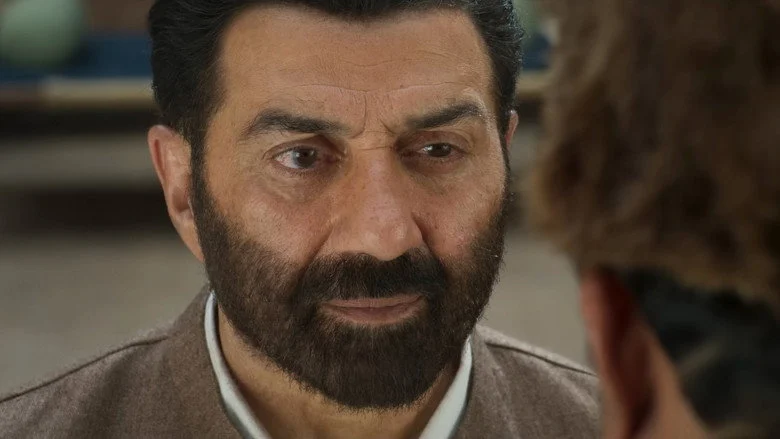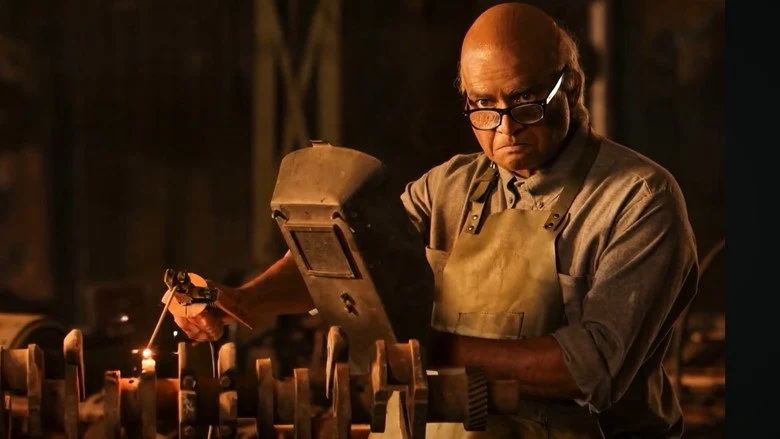
Sivalingam Mandradiyar (Thambi Ramaiah), a feudal landlord in Pollachi, looks at a struggling actor and declares him the “next M.G.R.”, the line lands with the eerie weight of delusion. In that single moment, Umapathy S. Ramaiah’s TN 2026 announces itself as a political satire built on obsession, but the film’s ambition outstrips its craft.
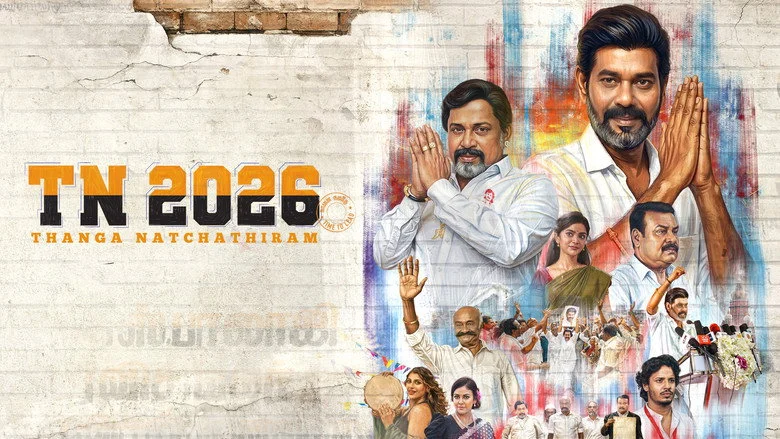
Natty Subramaniam’s reluctant rise
As Kukanth Kumar, Natty Subramaniam conveys ambition and vulnerability in equal measure. His public speech scene, where he defies Mandradiyar’s wishes, marks a genuine turning point, showing a performer who has internalized the cost of borrowed power. The final confrontation reveals emotional complexity, though the rushed writing undercuts his work.
I found his restraint impressive; he never overplays the transformation from puppet to political entity. That restraint, however, is not always matched by the script.

Thambi Ramaiah’s landlord as a tragicogrotesque figure
Thambi Ramaiah gives Mandradiyar a fierce, almost pathetic intensity. His obsession with M.G.R. is not a quirk but a worldview, he speaks of “one child enough to keep our identity as thousand-acre zamindars” as if reciting scripture. The actor makes this regressive code feel lived-in rather than cartoonish.
Ramaiah’s performance is the film’s strongest anchor. Without his conviction, the satire might collapse into caricature.
Genre-core execution: Political satire with a heavy hand
The film’s use of Pollachi’s feudal landscape is its sharpest tool. The wide shots of ancestral homes and dusty fields do not just set the scene, they ground the satire in a specific, decaying power structure. When Mandradiyar first “discovers” Kumar, the staging makes the landlord’s control feel almost mythic.
Yet the satire often conflates trends with truth, as New Indian Express noted. The script points at corruption and ambition without cutting deep, and the dialogues risk sounding like slogans. A sharper writer might have turned these monologues into subtext, not speeches.
The central conflict, ambition versus manipulation, drives the narrative cleanly through the first half. But the second half loses momentum, and the climax feels abrupt, almost as if the director ran out of room to resolve the ideas he set in motion.
Supporting cast: Shadows where flesh should be
The supporting roles barely register. Characters appear and vanish without clear motivations, which The Times of India flagged as a weakness in its 5.8/10 review. The underdeveloped ensemble means that Kumar’s rise feels solitary, robbing the satire of the ecosystem that usually surrounds political ascents.
Given the film’s focus on feudal hierarchy, the absence of layered supporting figures is a missed opportunity. Their thinness makes the world feel smaller than it should.
The controversy that preceded the release
A PIL filed in the Madras High Court sought to stall the film’s release, arguing that the yardstick applied to Vijay’s “Jana Nayagan” must also apply here. The legal challenge added a meta layer to a film already about the politics of image-making. That real-world friction is more interesting than anything in the rushed final reel.
For more on how Tamil cinema handles ambition and power, browse our collection of Tamil Political Satire reviews.
Umapathy S. Ramaiah takes a genuine risk by centering a film on a deluded patron rather than a heroic lead. That risk is admirable, but it demands a screenplay that lands every punch. The Times of India described it as “a sprawling political satire that falters in its conclusion”, and that faltering is what sinks the experience.
If the idea of a landlord molding an actor into a leader intrigues you, watch the first hour; the second half will test your patience. The film is best seen in a regular theater, but the OTT release on April 30 might be kinder to those who want to skip through the weaker stretches.
TN 2026 attempts something bold but delivers a 2.5/5 experience, worth debating, less worth sitting through.
For a more controlled take on power dynamics, see Leader review.
A tighter examination of feudal tension appears in Neelira verdict.