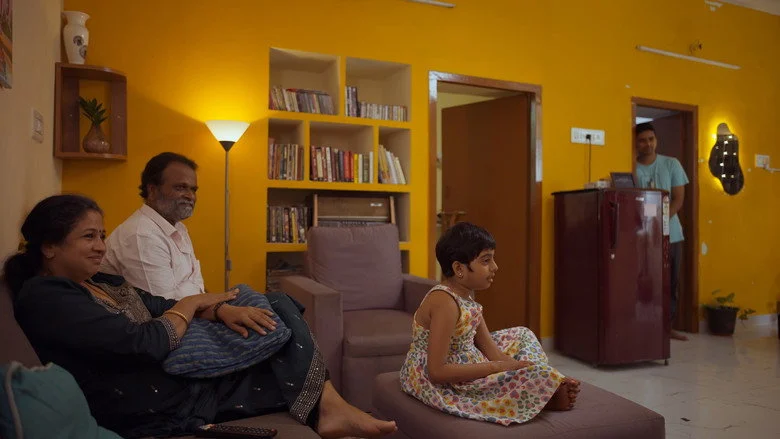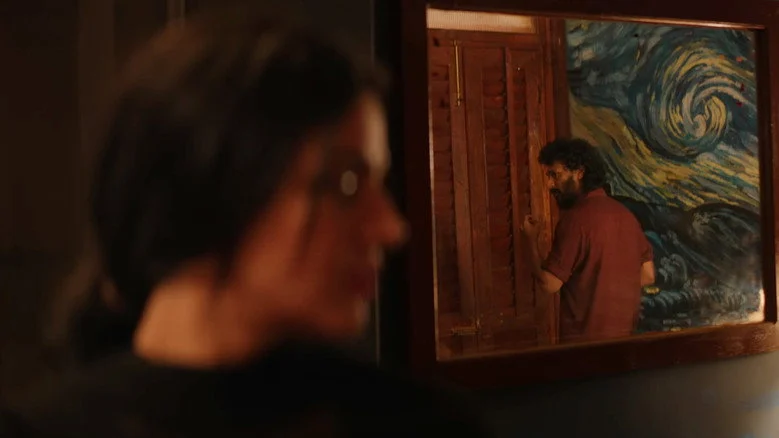
The first manifestation of the curse arrives without warning, a shadow that doesn’t belong to anyone in the room, a chill that makes the family dinner fall silent. From this single, economical shot, director KS Kishaan signals a horror film that wants to weaponize atmosphere over jump scares, and for nearly an hour, the gamble pays off. But by the time the third act forces its hand, Dark Giant has already spent most of its goodwill on an ending that can’t match the build-up.
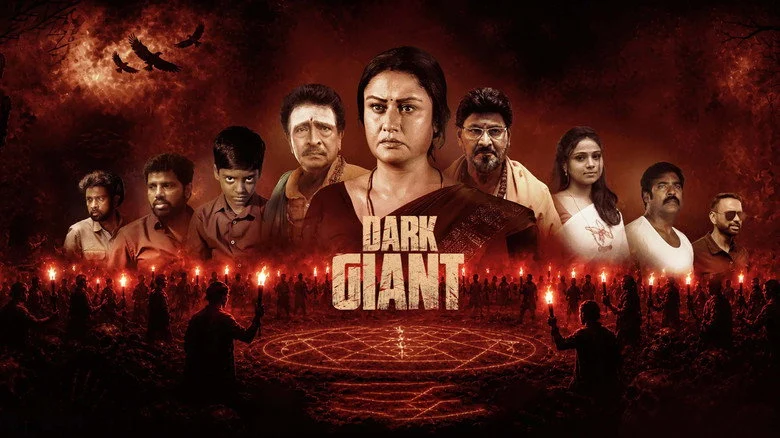
K. Bhagyaraj Anchors the Trauma With Weight
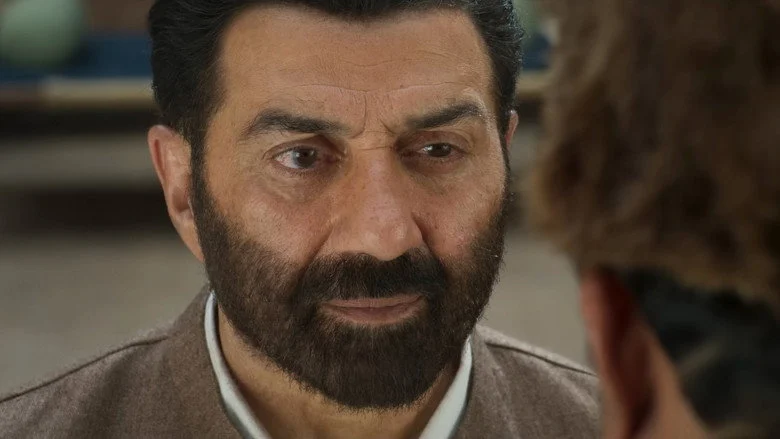
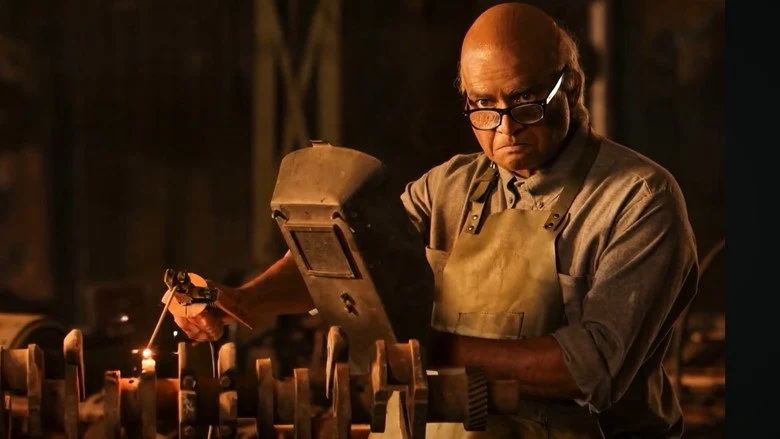
Bhagyaraj plays the patriarch with the weary authority of a man who has been carrying secrets longer than his children have been alive. His best moment comes during the revelation scene, a tight, static two-shot where his face shifts from denial to a sort of hollow acceptance. It is the kind of performance that asks the audience to read micro-expressions, and Bhagyaraj delivers. The actor never oversells the supernatural angle, grounding every reaction in the character’s very human guilt.
Sonia Aggarwal matches him in the quieter stretches, especially when the script forces her to confront the family’s buried history without the crutch of exposition. She makes silence feel like accusation.
Direction That Builds, Then Fumbles
KS Kishaan’s greatest strength is his restraint in the first hour. He lets the camera linger on doorways, shadows, and the uncomfortable pauses between conversations, trusting the audience to feel the dread before they see it. The screenplay’s linear reveal of generational secrets is well-structured, each new piece of information recalibrating what we think we know about the curse. But the same script grows impatient in the second half. Several plot threads, particularly a subplot involving a long-lost relative, are introduced and abandoned without payoff. The climax, which should be the emotional and narrative fulcrum, arrives with the rushed efficiency of someone ticking off a checklist. One scene sets up a major confrontation; the next resolves it in a single line of paraphrased dialogue: “Only by facing them can we break it.” That’s not catharsis. That’s a shortcut.
Supernatural Horror That Works When It Stays Psychological
The genre-core execution here is a study in split intentions. The film’s best horror sequences rely on suggestion: the initial manifestation in the family home uses off-screen sound and a destabilizing camera tilt to create unease without showing anything concrete. Kishaan understands that the unseen is always scarier than the seen.
But when the film shifts to explicit supernatural threat, it loses its nerve. The antagonist is never clearly defined, the “curse” floats between being a metaphor for greed and a literal entity, and neither version gets enough screen time to feel dangerous. The climactic confrontation is meant to be the moment where the family faces their internal flaws, but the staging is so vague that the tension dissipates.
The emotional core, generational trauma manifesting as a tangible curse, remains compelling in concept, but the rushed third act undermines the very dread the first half worked so hard to build. A slower, more deliberate final reel might have turned this into something truly unsettling.
Supporting Cast Brings Texture to Thin Roles
Livingston, as a weary family elder, delivers the film’s most lived-in performance. His eyes do the work the script often refuses to do, when he recounts the family’s past in a hushed kitchen scene, you believe the weight of years he’s carrying. Jovita Livingston, playing a younger relative caught between loyalty and fear, has a sharp moment during the confrontation where she refuses to be placated. The role is underwritten, but she injects genuine defiance into a scene that could have been passive. Amudhavanan appears briefly as a village elder who serves as the film’s reluctant exposition machine; the actor does what he can, but the character exists solely to deliver paraphrased wisdom about greed and guilt.
Audience Reception and the Curve of Expectations
Without major box office data or critical aggregates, the film’s reception rests entirely on word of mouth, and early signals are mixed. Audiences praise the emotional depth of the family drama and the effective use of supernatural elements to mirror psychological tension. Bhagyaraj’s performance is nearly universally cited as the reason to watch. But complaints are loud and consistent: the rushed climax, the underdeveloped plot points, and the inconsistent pacing in the second half have turned many viewers into reluctant skeptics. One audience sentiment I keep hearing is that the film feels like a 90-minute idea stretched to 136 minutes, then crammed into a 10-minute resolution.
For a deeper dive into similar Tamil territory, browse our collection of supernatural horror reviews.
The Verdict: A Watch With Caveats
Dark Giant is the kind of film you want to recommend for its ambition and its first half, but the second-hour slide is hard to ignore. See it for Bhagyaraj’s performance and Kishaan’s atmospheric craft in the opening stretch, but lower your expectations for the finale. A regular theatrical screening is fine; the film doesn’t need a bigger canvas, it needed a more patient editor.
Dark Giant earns a cautious 2.5 out of 5, a film that haunts more in memory than in execution.
For a slower-burn meditation on guilt and family secrets, Nizhal review offers a more satisfying descent.
And for a thriller where the motive carries more impact than the momentum, Moondram Kan verdict earns its slow burn.