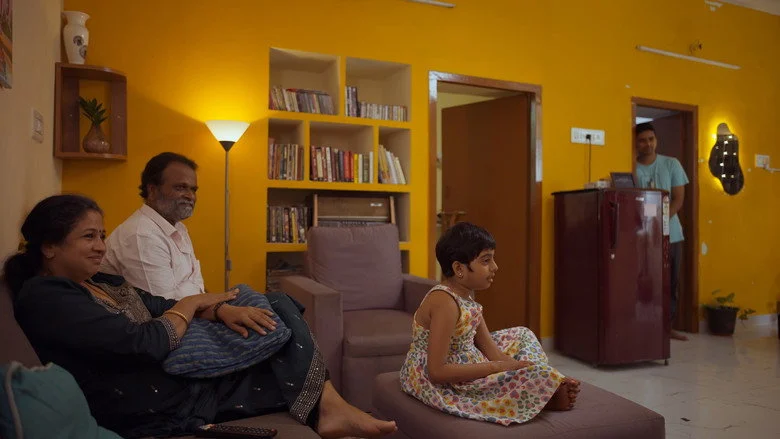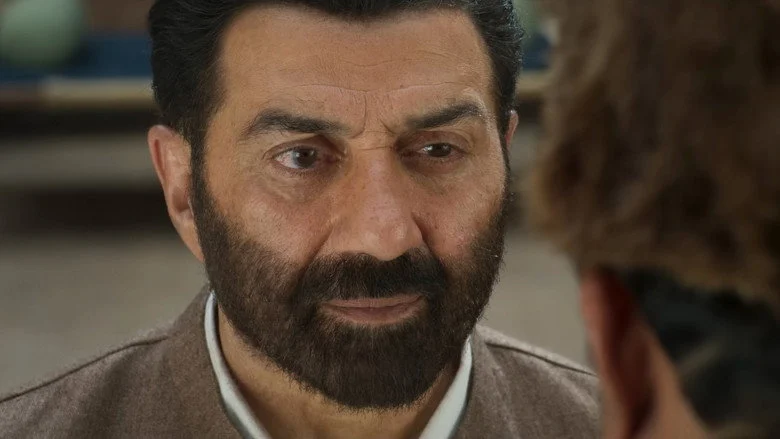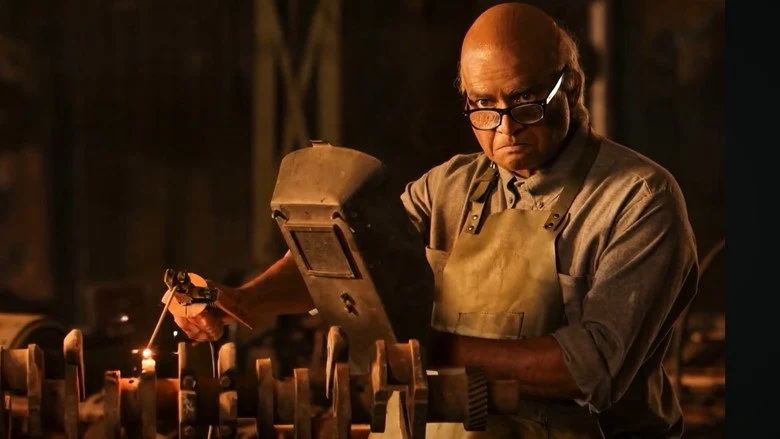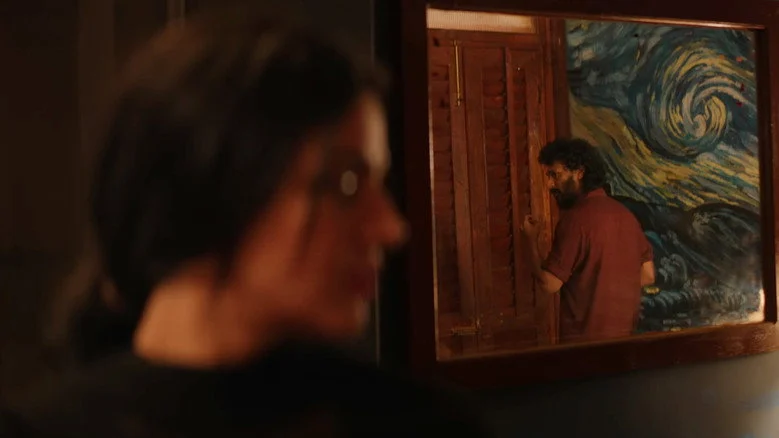
A factory manager lies dead on the floor, and the camera holds the frame just long enough to register the small, deliberate details, a misplaced tool, a half-open drawer, the stillness of the body. Four workers are pulled in, each carrying a version of truth shaped by years of buried resentment. From this opening, Sago Ganesan announces a mystery built not on who, but on why, and for the patient viewer, that distinction matters.
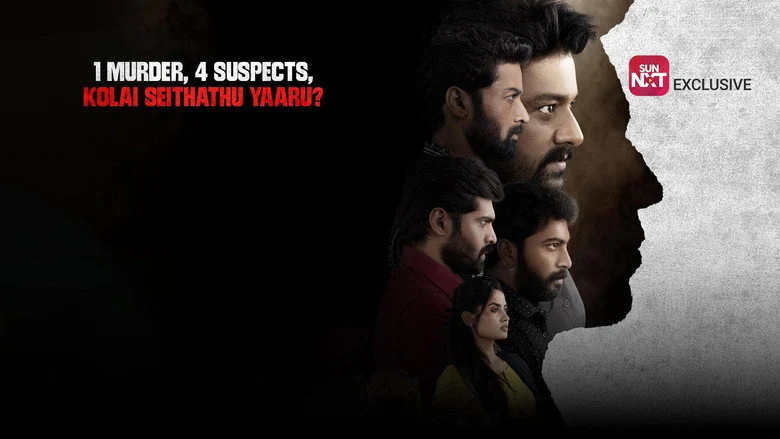
Kalaiyarasan’s interrogations anchor the film’s tense heart
The interrogation scene where Kalaiyarasan’s character slowly unravels the mechanic’s hidden resentment is the film’s best-acted passage. He shifts from professional calm to quiet menace without raising his voice. It is a performance that understands repression better than rage.
Vidharth matches him in the climax, revealing vulnerability through silence. I found his Act 2 portrayal of suppressed anger more compelling than the louder scenes around him.
Sago Ganesan builds a clean narrative box, but forgets the air holes
The direction keeps the mystery logical: every clue arrives with a reason, and the final deduction feels earned rather than forced. That structural clarity is the film’s genuine craft achievement.
Yet the screenplay middles out. The interrogation sequence drags into repetitive dialogue loops, and the slow pacing in the second half tests patience. A sharper edit could have trimmed ten minutes without losing the mystery’s integrity.
The crime thriller mechanics work best when the camera is still
The final revelation scene demonstrates why motive-based detective writing can be satisfying when it trusts the audience to connect dots. The killer’s motive is exposed through deduction, not confession, a quiet but effective choice.
Cinematography leans on dark tones in the interrogations and tight close-ups during the climax. The background score supports the mystery tone without overwhelming it. These are small, disciplined choices in a genre that often over-indulges.
Where the film stumbles is in rhythm. The steady first half gives way to a slower second half weighed down by exposition-heavy scenes. For a 115-minute runtime, the middle section feels longer than it is.
If you enjoy puzzle-box storytelling built on careful genre craft, browse more Tamil Thriller reviews for similar narrative experiments.
Santhosh Prathap, Thrigun A, and Harikrishnan fill gaps that needed more filling
Santhosh Prathap gets an underdeveloped antagonist role that limits his impact. His character lacks clear motivation, which reduces the threat of the final confrontation. The casting signals intent, but the script does not back it up.
Thrigun A provides subtle support in the suspect scenes, holding the frame without overacting. Harikrishnan adds welcome depth to the mechanic’s character, making his grudge feel personal rather than generic.
No political noise, just an audience divided by pace
The film has generated no public controversy, which fits its quiet release strategy. Audience reaction splits neatly: mystery fans praise the logical construction, while those seeking faster pacing complain about the dialogue-heavy middle. The climax’s emotional payoff works best for viewers who stayed engaged through the slower patches.
If a clean narrative structure and motive-driven deduction sound like your kind of evening, you will find enough to admire here. The film does not reward the impatient, but it respects the attentive. Watch it on Sun NXT in a single uninterrupted sitting.
Moondram Kan earns a careful 3 out of 5, a tighter second half away from a stronger recommendation.
For a lighter narrative with tighter rhythm, read our Double Occupancy review.
Kalaiyarasan’s natural stillness also carries weight in the Hello world verdict.