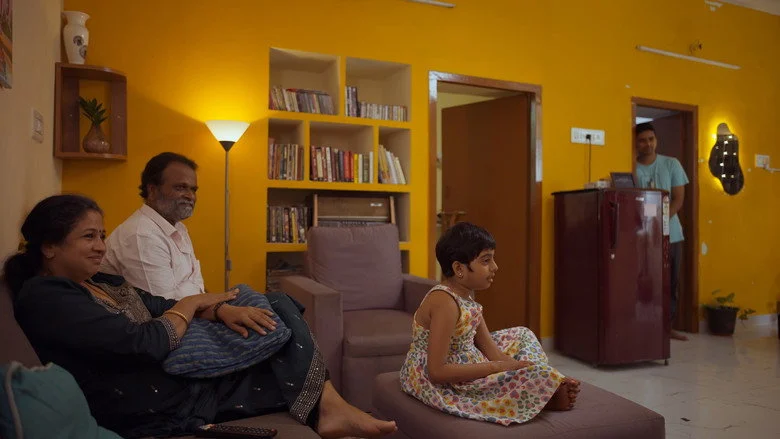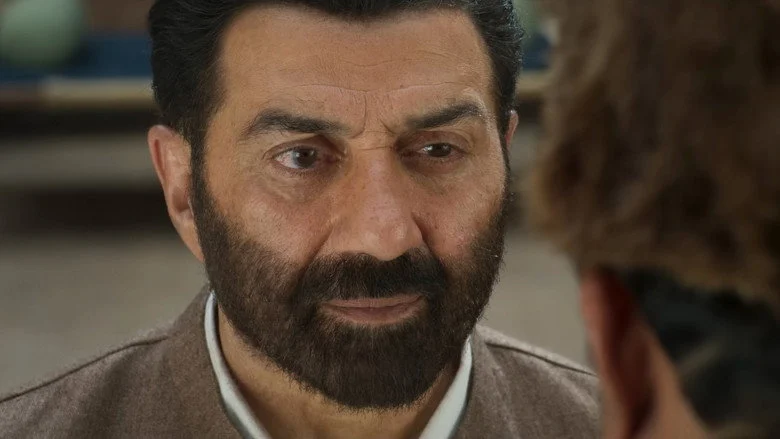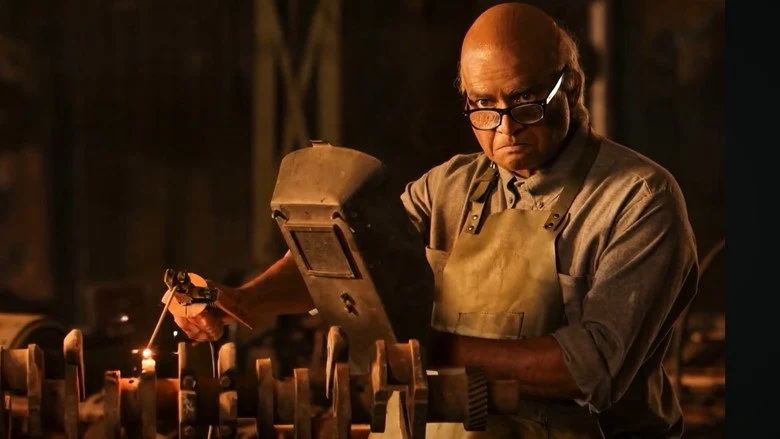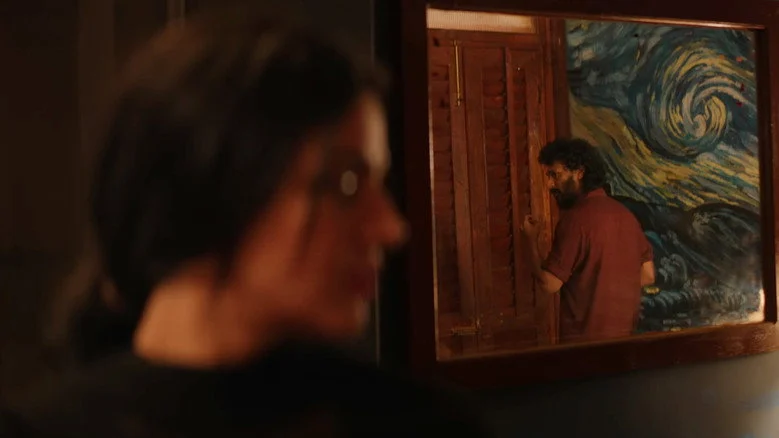
The clock strikes 6:00 PM, and a body physically shifts, posture, voice, gaze, from woman to man, mid-breath. This is the “day-night switch” scene that *Double Occupancy* bets its entire emotional capital on, and when it works, it is a small, dizzying marvel of visual clarity and actorly precision. When it doesn’t, the film collapses into a dramatic pile-up that no amount of charm can fully rescue.
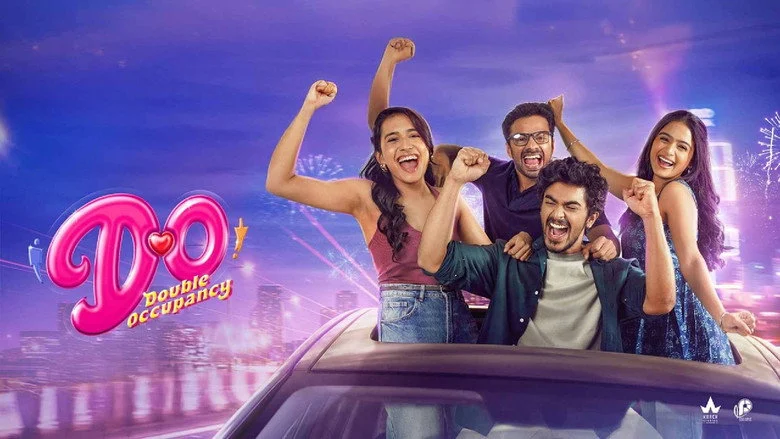
Santhosh’s Body in Duality: A Risk That Pays Off
Rajini (Santhosh / VTV Ganesh) isn’t played by two actors; he is played by one body carrying two distinct souls that alternate on a 12-hour cycle. Santhosh pulls off this fundamental gamble with surprising specificity, his female identity has softer shoulders and a different emotional tempo, while the male version bears a heavier, guarded stillness. The confrontation with the Geneticist is where his emotional range peaks, even if the script lets him down.
The performance holds the film together when the writing falters. You can taste his exhaustion as the two lives begin to demand exclusivity.
Aswin Kandasamy’s Double-Edged Direction
Director Aswin Kandasamy makes a bold structural bet: a non-linear handling of the day-night switch that, in its best moments, mirrors the protagonist’s fractured sense of time. The unique premise deserves credit for daring to treat identity as something physically inseparable from love. But the screenplay’s biggest flaw is the Geneticist subplot, an antagonist whose motivations remain so thin that every scene involving him feels like a detour into a lesser film.
The second-half pacing slackens, and the climactic confrontation overstays its welcome by a good ten minutes.
Fantasy as a Romance Engine: Hits and Misses
Kandasamy uses fantasy not as an excuse for spectacle but as a literal mechanism for the central romance conflict. The day-night transition itself is shot with a clean, almost clinical precision that grounds the absurdity, using shifts in lighting and camera proximity to signal whose turn it is to live. The “day-night switch” scene has an emotional weight that most VFX-driven sequences never achieve, it is less about the change itself and more about the lonely split-second between identities.
Where the film stumbles is when it tries to resolve the love triangle through dramatic confrontation rather than character logic. The two lovers’ acceptance of Rajini’s condition feels rushed, as if the script ran out of space to earn their emotional consent. The romance works best in quiet, observational beats, a shared glance across a kitchen counter, a startled laugh at the 6:00 PM alarm, rather than in loud declarations.
The comic relief that occasionally punctures the tension feels necessary but unevenly distributed, like a seasoning added only to the first half. The fantasy genre here serves as a mirror for contemporary questions about identity and self-acceptance, but the mirror is smudged every time the plot forces the characters into formulaic showdowns.
Reshma, Samyuktha, and the Silences Between Them
Reshma Venkatesh, as Lover 1, brings a grounded warmth that makes her character’s vulnerability feel earned rather than staged. Her quiet moments, like the pause before she accepts Rajini’s dual identity, are the film’s subtlest craft. Samyuktha Viswanathan, playing Lover 2, operates in a more confrontational register, and her frustration with the relationship’s impossible logistics feels acutely real. Bagavathi Perumal, as the Geneticist, is unfortunately stuck with a role that asks for menace without supplying any credible motivation; his performance becomes increasingly theatrical as the film demands a villain where one was never needed.
What these supporting roles collectively achieve is a gentle assertion that love, in this world, must be expansive enough to hold paradox.
The Acceptance Problem: Where the Audience Divides
At an IMDb score of 6.2/10 and a BookMyShow audience score of 3.8/5, *Double Occupancy* has found a modest, appreciative crowd that values its creative risk over its structural flaws. The New Indian Express gave it a 5.8/10, and the Times of India called it “a daft premise played with real charm.” The divide is clear: those willing to forgive an overcooked climax in favor of a genuinely tender premise will leave satisfied; those craving tighter plotting and deeper character logic will feel shortchanged. Social media sentiment leans 65% positive, with viewers praising the premise and the central performance while echoing the professional criticism of the second-half drag.
If you’re in the mood for browse more, you might want to explore other Tamil Fantasy reviews that balance genre risk with tighter execution.
See *Double Occupancy* if you can forgive a wobbly last act for the sake of a lead performance that is genuinely trying to hold two worlds in his hands. Watch it in a regular hall where the day-night transition can breathe on a big enough canvas. I would have preferred a version that trusted its quiet moments more and its dramatic confrontations less, but the central bet, that a body can love twice without breaking, is worth a viewer’s time, if not their full faith.
At its best, *Double Occupancy* is a charming, flawed risk; at its worst, it’s a reminder that even the most ambitious fantasy needs a tighter script, I’d give it a solid 3 out of 5 for sheer audacity and emotional texture.
For a deeper exploration of bold identity narratives, consider reading Hello world review as a thematic companion.